11
11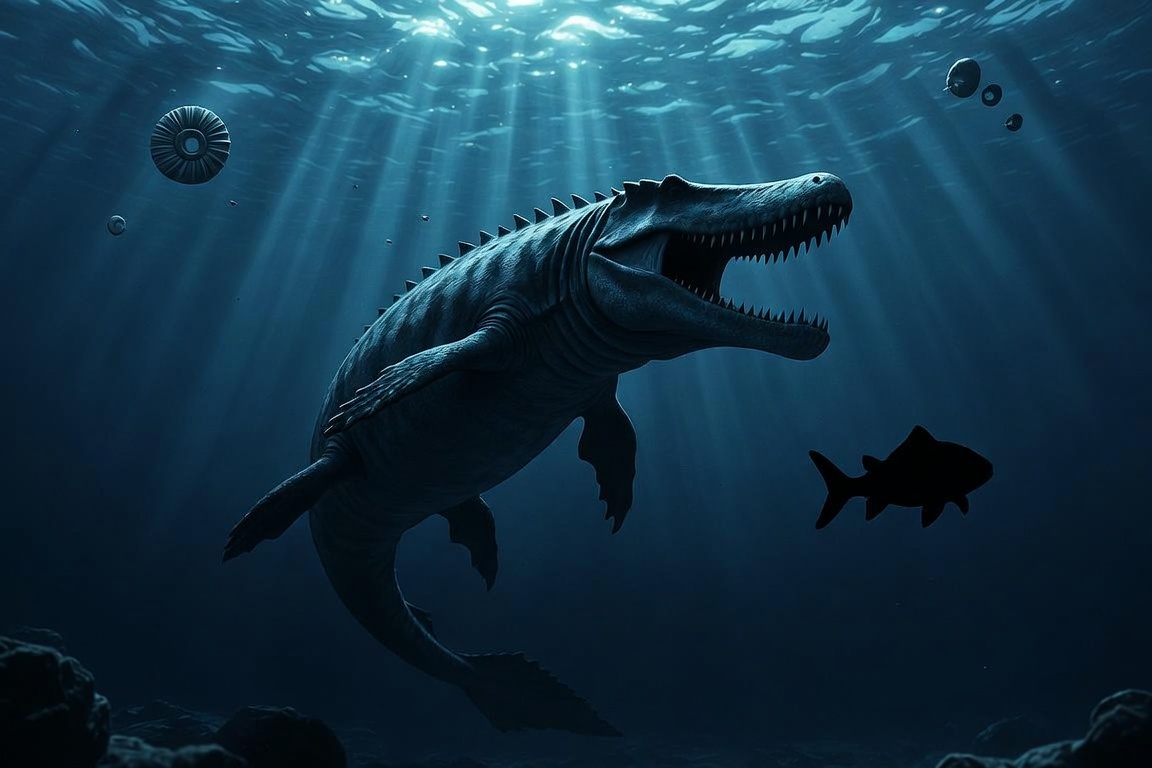
Mosasaurus is often thrown into the same mental box as dinosaurs because it lived during the dinosaur age and appears in prehistoric media beside them. But that framing is not accurate.
Mosasaurus was not a dinosaur.
It was a marine reptile, part of a group called mosasaurs. These animals were related to lizards and snakes in a broad evolutionary sense, and they became some of the dominant predators of the Late Cretaceous seas.
That correction matters because it makes the animal more interesting. While dinosaurs ruled many land ecosystems, mosasaurs were taking over the oceans. They were not leftovers or side characters. They were major marine predators in their own right.
Mosasaurus represents a world where reptiles had invaded the sea and become massive hunters. The ocean was not empty background scenery for the dinosaur age. It was its own battlefield.
Mosasaurs evolved bodies suited for marine life. They had streamlined forms, paddle-like limbs, strong tails, and powerful jaws. Different mosasaur species varied in size, diet, skull shape, and ecology, but the broad image is clear: these were active ocean predators.
Mosasaurus itself was one of the famous members of the group. Fossils show jaws and teeth designed for grabbing prey.
Mosasaurs are interpreted as feeding on fish, ammonites, turtles, birds, other marine reptiles, and whatever their species and environment allowed them to overpower.
They did not chew like mammals. Their teeth were suited for seizing, piercing, and holding. In the water, that is enough. A predator does not need to delicately process prey when it can strike, grip, shake, and swallow.
Some mosasaurs also had flexible skull features and feeding adaptations that helped them handle prey. This is part of what makes the group so fascinating: they were not just big reptiles in water. They were a successful marine radiation with different body types and predatory roles.
The Late Cretaceous ocean was full of life. Ammonites drifted through the water. Large fish moved through marine food webs. Sea turtles, diving birds, plesiosaurs, and other reptiles occupied different niches. Into this world came mosasaurs, rising as some other marine reptile groups declined.
Mosasaurus lived near the end of the Cretaceous, close to the final chapter before the asteroid impact and mass extinction. That timing gives it a cinematic edge.
It was not an early experiment. It was part of the last great wave of marine reptile dominance before the entire system crashed.
The ancient sea was not peaceful. It was filled with pursuit, ambush, scavenging, competition, and extinction pressure. Mosasaurus was one of the animals that made it dangerous.
In visual terms, it is easy to understand why the creature grips public imagination. A giant marine lizard with a massive jaw rising through dark water feels like a sea monster. But unlike folklore sea monsters, mosasaurs are known from fossils. The monster-like feeling comes from real bones.
The confirmed evidence and interpretations are distinct:
Popular media often exaggerates size or behavior for drama. That is not necessary. The real animal was already dramatic enough.
The safest storytelling frame is that Mosasaurus was an apex or near-apex marine predator in many contexts, capable of taking large prey, but not an invincible movie monster. It lived within an ecosystem, competed with other predators, and depended on the food web around it.
At the end of the Cretaceous, about 66 million years ago, a massive asteroid impact helped trigger one of the most famous mass extinctions in Earth history. Non-avian dinosaurs vanished. Many marine groups were devastated. Mosasaurs disappeared too.
This is the part of the story that makes Mosasaurus more than just a predator profile. It shows that dominance does not guarantee survival. A creature can sit near the top of the food chain and still fall when the chain itself breaks.
Marine ecosystems were hit hard by the consequences of the impact, including darkness, disrupted photosynthesis, collapsed food webs, and changing ocean conditions. Large predators like mosasaurs depended on a functioning system beneath them. When that system failed, their power could not save them.
Mosasaurus remains fascinating because it occupies the thin line between science and monster imagery. It was real, but it looks like something sailors might have invented after seeing a shadow under the water.
The difference is evidence. Fossil jaws, skulls, teeth, and skeletons show that mosasaurs were not legends. They were part of Earth’s history. The ancient ocean really did contain giant reptile predators.
That is why Mosasaurus is such a strong subject. It is not a dinosaur, but it belongs to the dinosaur age. It is not mythical, but it feels like a sea monster. It was powerful, but it still vanished.
For a while, the late Cretaceous seas belonged to reptiles like this.
Then the sky changed, the food web collapsed, and the rulers of the water disappeared.