11
11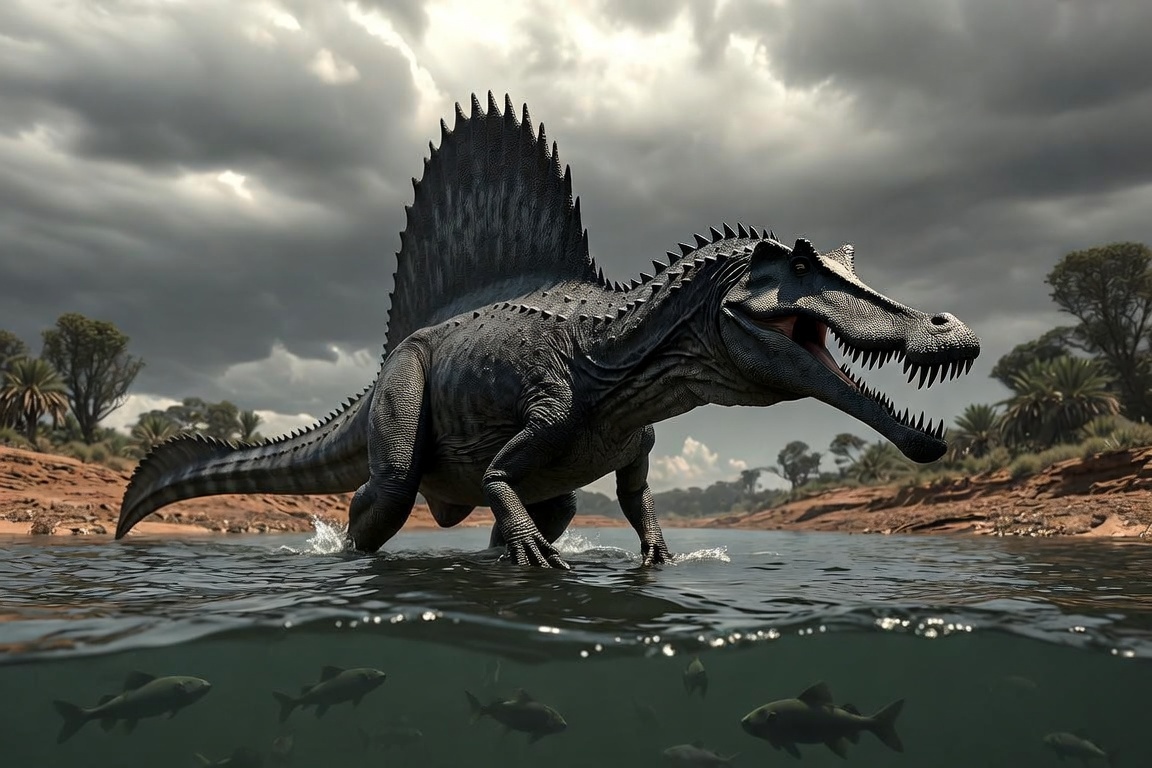
Spinosaurus is one of the most debated dinosaurs in the world. It had a long crocodile-like snout, conical teeth, powerful arms, and a tall sail on its back. It lived in North Africa during the Cretaceous, in environments tied to rivers, wetlands, and ancient water systems.
For decades, Spinosaurus has been reconstructed, destroyed by war, rediscovered, reinterpreted, and argued over again. Few dinosaurs have changed public image this many times.
The biggest debate is simple to ask and hard to answer: how aquatic was it?
Spinosaurus clearly had a strong relationship with water. Its teeth and snout are well suited for catching fish. Fossil deposits connected to spinosaurids include aquatic animals. Some studies have argued that dense bones and tail anatomy support swimming ability.
Other researchers have pushed back, suggesting Spinosaurus was more of a shoreline predator or wader, not a fully aquatic pursuit hunter. Newer work continues to refine the picture, including research on close spinosaurid relatives and river-based ecologies.
This is why Spinosaurus is so good for EdgeCase. The animal is not boringly solved. It lives at the edge of interpretation, where anatomy, physics, sediment, and ecology all collide.
The sail is the most visible feature. It may have been used for display, species recognition, thermoregulation, fat storage, or some combination of functions. Scientists continue to debate its exact role.
In visual storytelling, the sail creates an unmistakable silhouette. A tall spine-backed predator moving through shallow water is instantly recognizable. But the sail also complicates the swimming question. A large structure on the back affects drag, stability, and movement.
That is part of the mystery. Spinosaurus had features that point toward water, but not every feature points toward the same kind of aquatic lifestyle.
The honest version should not pretend the argument is over. Spinosaurus is famous partly because the science keeps moving.
Spinosaurus is powerful because it breaks the standard theropod image. It is not just another land predator with big teeth. It is a sail-backed river animal with a crocodile-like head and a lifestyle that scientists are still trying to pin down.
That uncertainty is the hook. A dinosaur that refuses to fit neatly into land or water feels more mysterious than a solved monster.
Spinosaurus reminds us that fossils do not always give clean answers. Sometimes, they give a predator standing in shallow water while science argues from the riverbank.
References: