11
11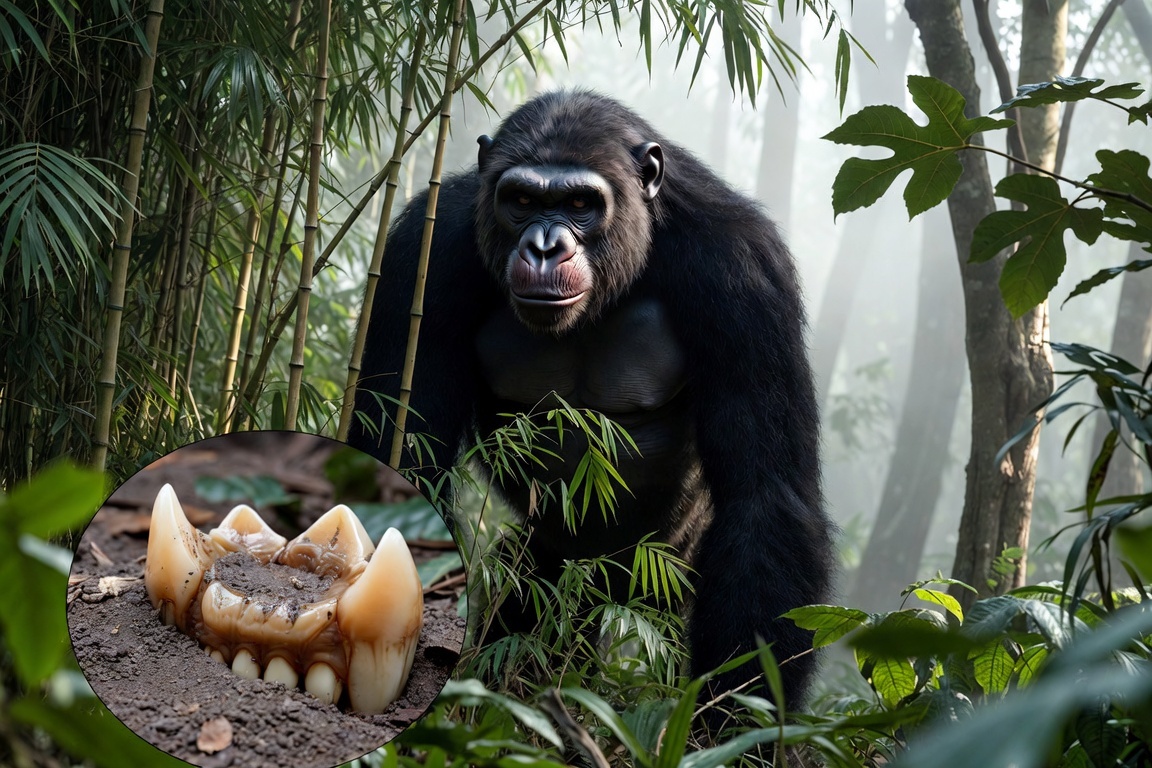
Gigantopithecus blacki sounds like it belongs to monster legend, but it was real. It was the largest known primate, an extinct great ape that lived in southern China during the Pleistocene.
The catch is that scientists do not have a full skeleton. The animal is known mainly from teeth and jaw fossils. That makes Gigantopithecus both famous and frustrating. It was clearly enormous, but much of its full appearance has to be reconstructed cautiously from limited evidence and comparison with living apes.
This is why it is perfect for evidence-based mystery. It feels like a cryptid, but it is not one. It is a real fossil ape with a body we can only partly see.
The teeth of Gigantopithecus are the key. They are huge, and they preserve clues about diet and environment. Recent Nature research used cave deposits, dating methods, pollen, sediment, and tooth chemistry to investigate why this giant ape vanished.
The conclusion was not a dramatic predator battle. It was ecological vulnerability.
Gigantopithecus appears to have struggled as forests changed and food became more seasonal. Smaller and more flexible apes, such as orangutans, could adapt their behavior and diets more successfully. Gigantopithecus, with its huge body and specialized needs, may have been trapped by its own scale.
That is a darker story than a monster fight. It is the story of a giant slowly running out of the world it was built for.
Because Gigantopithecus was a giant ape, people often drag it into Bigfoot-style speculation. That should be handled carefully. Fossil evidence supports Gigantopithecus as an extinct Pleistocene ape from Asia. It does not prove modern giant ape sightings.
The honest angle is stronger: many giant ape legends feel more believable because real giant apes once existed. But fossil reality and modern cryptid claims are not the same thing.
Gigantopithecus should be framed as a real extinct animal, not proof of an unverified creature.
Gigantopithecus is haunting because it reverses the usual monster story. It was not destroyed because it was weak. It may have vanished because it was too large and too specialized to survive a changing forest.
That idea hits hard. Size can be power, but it can also become a trap.
The image that remains is quiet: a massive ape hidden in bamboo, chewing through a shrinking menu of food, while the forest around it slowly becomes less forgiving.
References: