11
11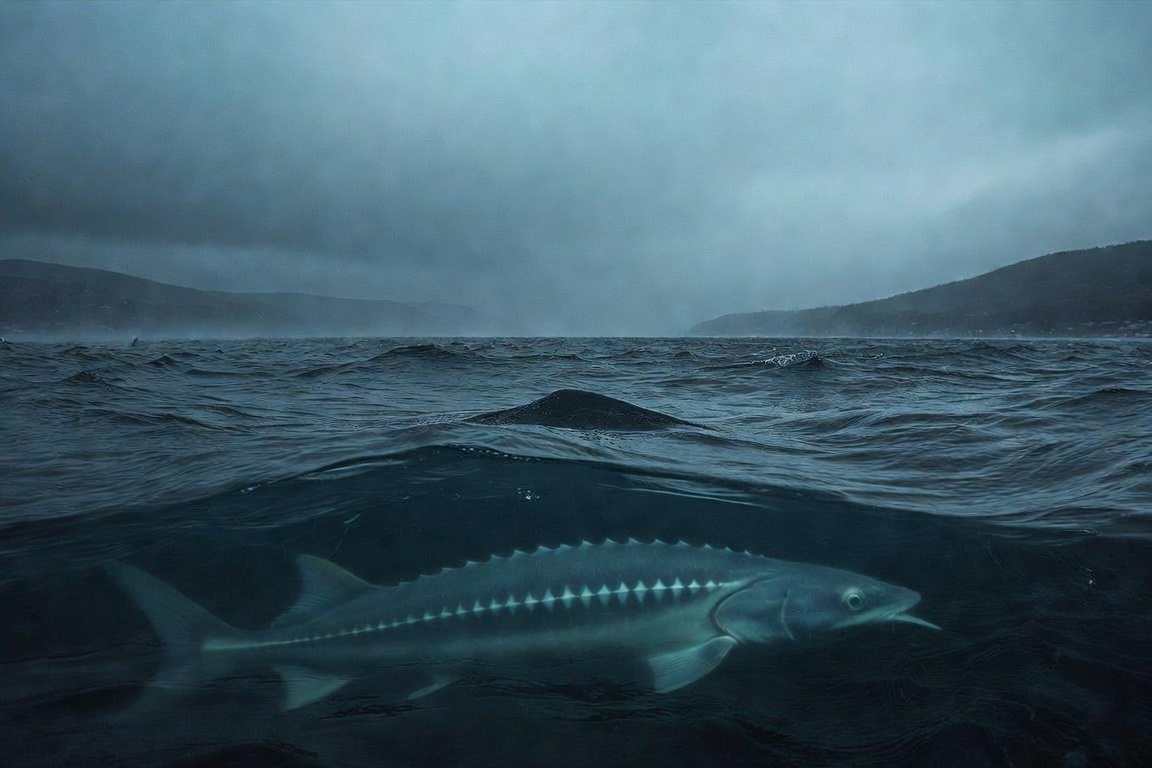
Champ is often called America’s Loch Ness Monster. The legend belongs to Lake Champlain, a long freshwater lake stretched between New York, Vermont, and Quebec.
Like Nessie, Champ is usually described as a long, dark, serpent-like creature moving silently through deep water.
The confirmed part of this story is entirely cultural. Champ is a real legend, deeply tied to the identity and heritage of the Lake Champlain region.
Sightings have been reported for generations, local tourism embraces the creature, and the story has become a permanent fixture of regional folklore.
The unconfirmed part, however, remains the actual existence of an unknown large animal living in the lake.
Lake Champlain itself helps the story work. It is large, long, and visually dramatic.
Water conditions here can easily create strange wakes and deceptive wave patterns. In addition:
A witness may very well see something real, while still completely misidentifying what it actually is.
One grounded natural explanation often discussed is the presence of large fish. Regional wildlife sources point to alligator gar or lake sturgeon as the most likely inspirations.
Lake sturgeon, in particular, are ancient-looking fish with long bodies, armored plates, and a distinctly prehistoric profile.
A large sturgeon surfacing in poor visibility could look strange enough to start a monster story—especially if the viewer is already expecting to see one.
This does not prove every Champ sighting is a sturgeon. It also does not prove Champ exists as a separate, unknown species.
The honest frame is that the legend is unresolved culturally, but scientifically unsupported as a hidden monster population.
The lake monster pattern is a familiar one. A deep or large lake gains a creature myth, and soon people begin seeing humps, wakes, necks, or shadows everywhere.
Over time, the monster becomes less about physical evidence and more about a sense of place. Champ is not just an alleged animal; it is a way Lake Champlain tells people it still holds secrets.
For EdgeCase, the strongest angle is not chasing fake proof. It is exploring the fascinating tension between folklore and biology.
Real large fish live in the water. Real people report strange sightings. Real communities build their identity around the legend. Yet, no accepted physical evidence has ever confirmed a new species.
Champ remains fascinating because it shows how a lake can become a stage.
Every ripple becomes a possibility. Every blurry photo becomes a fierce debate. Every large fish becomes a suspect.
The monster may never surface clearly, but the story keeps moving effortlessly across the water.