11
11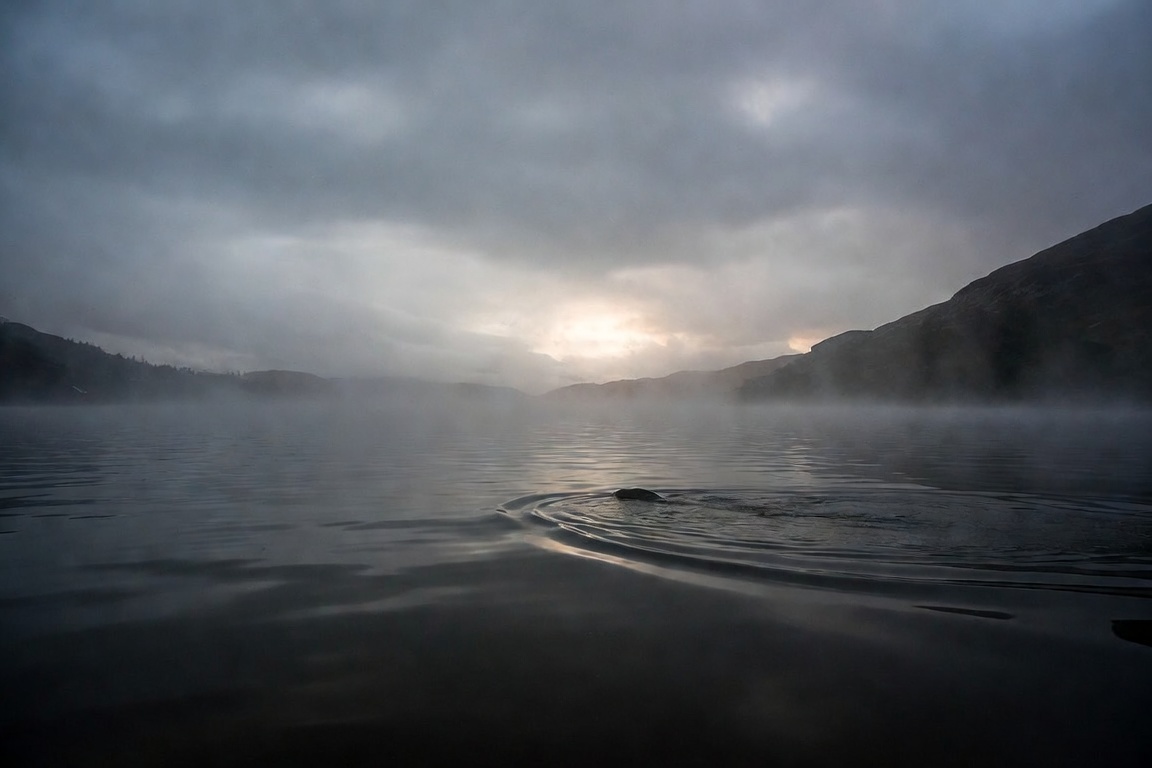
The Loch Ness Monster is one of the most famous cryptids in the world. The image is almost universal: a dark Scottish lake, a long neck rising through mist, and a shape that looks too ancient to belong in modern water.
People call it Nessie, and for decades it has lived somewhere between folklore, tourism, eyewitness memory, and scientific curiosity.
Loch Ness itself helps the legend survive. It is long, deep, cold, and visually dramatic. Its water is dark with peat staining, which drastically reduces visibility.
Wind, wakes, floating debris, birds, seals, fish, and optical effects can all produce shapes that look strange from a distance. A lake like that does not need a monster to look haunted.
The confirmed facts are clear: Loch Ness is real, sightings have been reported for generations, and the monster has become a major cultural symbol.
The unconfirmed claim is that a large unknown animal, often imagined as a surviving plesiosaur-like reptile, lives in the loch. To date, no accepted physical evidence has confirmed that claim.
In 2019, researchers announced results from an environmental DNA (eDNA) study of Loch Ness. This method works by sampling water and detecting genetic traces left behind by living organisms.
The team found many known organisms, but they did not find evidence for a large unknown reptile, shark, sturgeon, or catfish.
Instead, they reported a strong signal for eel DNA, raising the possibility that some sightings could involve large eels or eel-like misidentifications.
That result did not prove a giant eel monster exists. It simply made eels one of the more interesting natural explanations.
Eels certainly live in the loch, but could some grow unusually large? That is still not the same as proving Nessie.
The honest conclusion is sharper: the DNA study weakened the plesiosaur-style monster idea but left plenty of room for natural misidentification.
The plesiosaur theory has always had major scientific problems. Plesiosaurs went extinct around 66 million years ago, while Loch Ness in its current form is geologically much younger.
Furthermore, a breeding population of large, air-breathing reptiles would need food, space, repeated clear sightings, carcasses, bones, and biological traces. None of that has ever appeared in a scientifically accepted way.
But Nessie still matters because the story is not just about a creature. It is about how people interpret water.
Lakes hide depth. Fog reduces certainty.
The moment is brief, the photo is blurry, and the human mind turns uncertainty into a shape.
The Loch Ness Monster remains fascinating because science did not erase the mystery—it narrowed it. It tells us what Nessie probably is not, while keeping the deeper question alive: why do humans keep seeing monsters in dark water?