11
11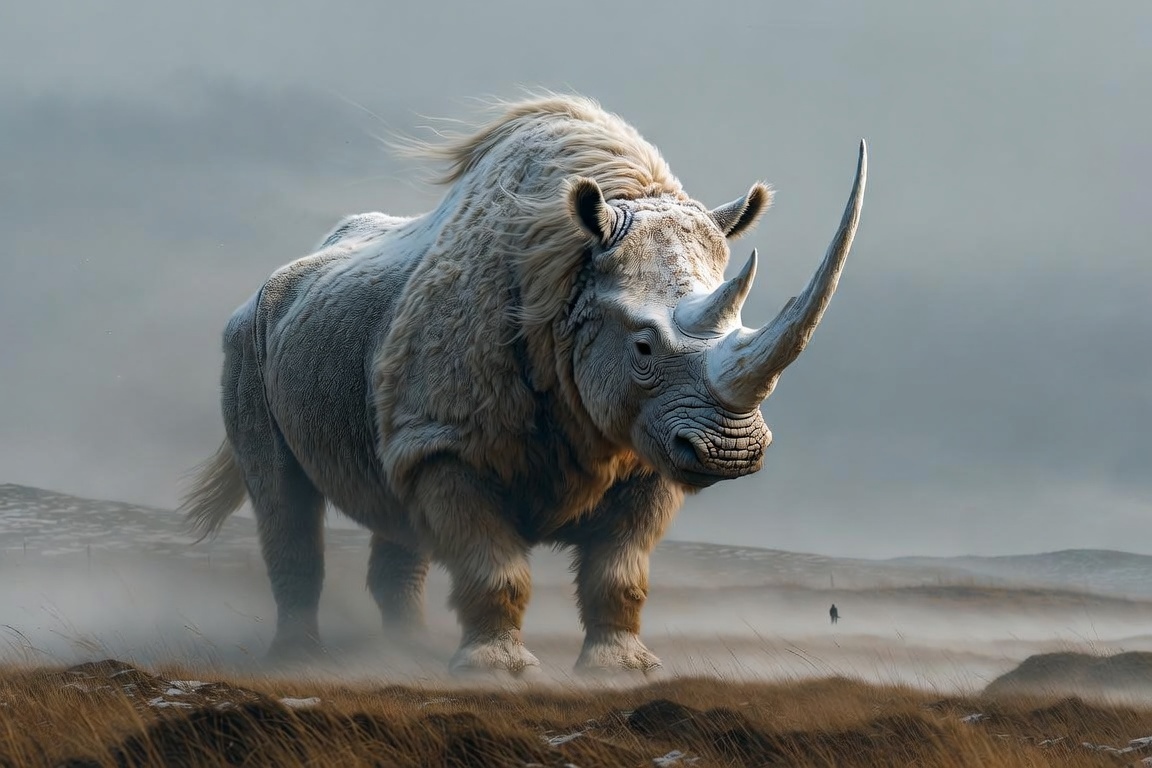
The word “unicorn” usually creates the wrong image. People picture a graceful white horse with a spiral horn, glowing in a forest like something from a medieval manuscript. Elasmotherium sibiricum destroys that image immediately.
The so-called Siberian unicorn was not a horse. It was a massive extinct rhinoceros.
It lived across parts of Eurasia during the Ice Age, carrying a body that was heavy, muscular, and probably adapted to open grassland environments. Instead of elegance, imagine weight. Instead of a delicate fantasy animal, imagine a shaggy rhino built for cold wind, hard ground, and survival on ancient steppe.
That contrast is what makes Elasmotherium such a strong EdgeCase topic. It sits in the space between real fossil evidence and mythic language. The animal was real. The fairy-tale unicorn was not. But the existence of a giant one-horned rhinoceros makes the story feel like folklore grew from something Earth actually produced.
Elasmotherium sibiricum belonged to an extinct rhinoceros lineage. It was larger than modern rhinos, with long limbs and a skull that has led scientists to discuss the presence of a large horn. Horns themselves usually do not fossilize like bone because rhino horns are made of keratin, but skull anatomy can preserve the region where a horn would have attached.
This is important because the popular image of Elasmotherium often shows a huge horn. The presence of a horn is widely accepted, but exact shape, length, and appearance are reconstructed. It should not be drawn like a magical spiral spear. It was likely a biological structure, rough and rhino-like, not a fantasy prop.
The animal’s teeth and skull suggest it was adapted for grazing. It likely fed on tough grasses across open environments. That matters because the Ice Age steppe was not just a snowy wasteland. It was a vast ecosystem with mammoths, horses, bison, saiga, predators, and large herbivores adapted to cold, dry conditions.
Elasmotherium was part of that world, not a lone monster wandering through myth.
For a long time, scientists believed Elasmotherium had vanished much earlier. But research published in 2018 helped revise that picture, indicating that the Siberian unicorn survived until roughly 39,000 years ago. That means it may have overlapped in time with modern humans and Neanderthals in Eurasia.
This is where the story becomes extremely clickable, but it needs careful handling.
Overlap in time does not prove direct interaction. It does not prove that human legends of unicorns came from seeing Elasmotherium. It does not prove people hunted it, painted it, or told stories about it. What it does show is that the animal survived later than previously thought, close enough to the human timeline to raise fascinating questions.
The best version is honest: Elasmotherium was a real one-horned Ice Age rhinoceros, and it lived late enough that humans existed in the wider world. Whether it directly inspired unicorn legends remains speculation.
That boundary matters because the truth is already strange enough.
The extinction of Elasmotherium appears linked more to ecological pressure than simple hunting. Research suggests it may have been highly specialized for grazing in steppe environments. If climate change altered vegetation and reduced the grassland resources it depended on, a specialized giant herbivore would have been vulnerable.
This makes Elasmotherium feel tragic. It was huge, powerful, and visually unforgettable, yet its survival may have depended on a narrow ecological niche. Large size does not protect an animal from a changing world if its food system collapses.
Modern audiences often think extinction comes from one dramatic event: a meteor, a spear, a disaster. Sometimes it does. But often it is slower and more complicated. Habitat changes. Food becomes scarce. Populations shrink. The animal that once looked unstoppable disappears.
Elasmotherium may have been a victim of that kind of pressure.
Scientists can say the animal was real. They cannot honestly say it is the confirmed origin of every unicorn legend.
This separation makes the story stronger. It lets the mystery breathe without turning it into fake certainty.
The fantasy unicorn is clean, pretty, and safe. Elasmotherium is not. It is heavier, colder, stranger, and more believable. It belongs to a world of mammoths, cave lions, steppe winds, and human survival.
That is the EdgeCase hook: the real “unicorn” was not a magical horse. It was an Ice Age rhinoceros with enough presence to make the myth feel weak.
It reminds us that folklore sometimes reaches toward things people can barely explain, but science can reveal animals even more interesting than the stories. Elasmotherium did not need magic. It had mass, horn, cold, extinction, and a fossil record that changed what scientists thought they knew.