11
11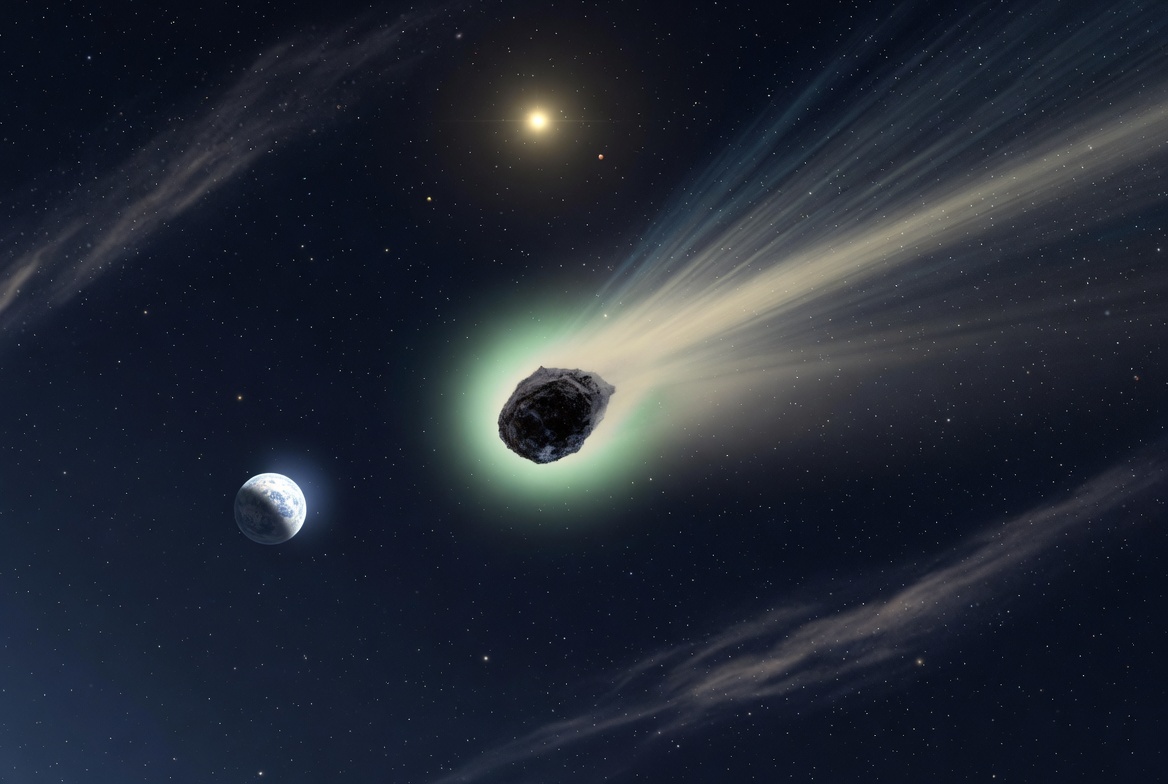
Most comets belong to our solar system. They orbit the Sun, return over time, and carry icy material from the outer regions of our own cosmic neighborhood.
But 3I/ATLAS is different. It is only the third confirmed interstellar object ever detected passing through our solar system, after 1I/‘Oumuamua and 2I/Borisov.
That means it did not form here. It came from somewhere else—another star system, another ancient environment. New observations are helping astronomers understand just how strange it may be.
3I/ATLAS was officially discovered on July 1, 2025 by the ATLAS survey. But astronomers later found that the Vera C. Rubin Observatory had captured it before that, during early science validation observations.
That is called a precovery: finding an object in older images after you already know where to look.
Those earlier images help extend the observation timeline. The longer the timeline, the better scientists can calculate the object’s path, behavior, and activity. In this case, older images showed the comet was already active before its official discovery. That matters because activity reveals how an icy object responds to sunlight.
3I/ATLAS is not just rare because it is interstellar. Its chemistry appears unusual.
Reports suggest the comet has a very high deuterium-to-hydrogen ratio in its water compared with typical solar system comets. Deuterium is a heavier form of hydrogen. A high ratio can point to formation in an extremely cold environment.
Some researchers interpret this as evidence that 3I/ATLAS may have formed far from its original star, possibly in a very ancient part of the galaxy. Some reports suggest it could be around 10 to 12 billion years old.
That number should be treated carefully because age estimates for interstellar objects are model-based. Scientists are interpreting speed, composition, and galactic context. But even as a possibility, it is insane. Earth is about 4.5 billion years old. This comet may be much older.
The most exciting interpretations involve its origin and age. A high heavy-water signature suggests the comet may have formed in a colder environment than many solar system comets. Its orbit and speed show it came from outside the solar system.
But the exact birthplace is unknown. No one can point to a star and say, “It came from there.” Interstellar objects are cosmic drifters. They can travel for billions of years after being ejected from their original planetary systems.
Every interstellar object attracts speculation. ‘Oumuamua did, and 3I/ATLAS did too.
But NASA and astronomers have emphasized that 3I/ATLAS behaves like a comet. It has natural activity, natural gas and dust emissions, and a hyperbolic path through the solar system.
The real mystery is not whether it is artificial. The real mystery is what it can teach us about another planetary system. That is way cooler and way more credible.
3I/ATLAS is a rare interstellar comet passing through our cosmic neighborhood. It may carry chemical clues from a cold, ancient birthplace beyond the Sun.
It is not an alien craft. It is something better: a natural time capsule from another star system, crossing our sky once before disappearing back into deep space.