11
11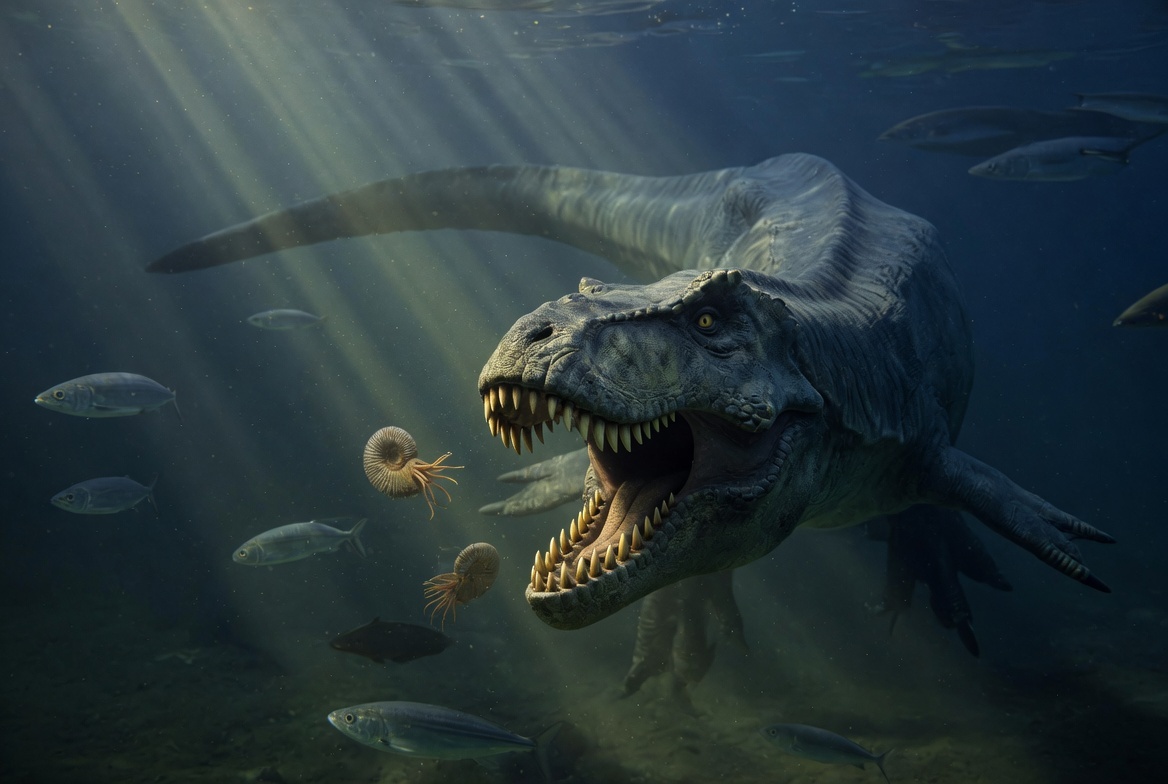
The name sounds like clickbait: Tylosaurus rex.
But this is not a meme. Scientists have identified a new species of giant mosasaur, and the name is real. Unlike Tyrannosaurus rex, this predator did not rule the land. It ruled the sea.
The newly described marine reptile lived around 80 million years ago, during the Cretaceous Period. It belonged to the mosasaurs—a group of large ocean reptiles that were not dinosaurs, but shared the same ancient world.
And this one was huge. Reports describe Tylosaurus rex as reaching up to about 43 feet (13 meters) long. That is roughly the size of a school bus.
Tylosaurus rex had a long body, powerful flippers, and a skull built for violence.
The phrase “T. rex of the sea” works because it captures the role this animal played: a top apex predator in a dangerous marine ecosystem.
But scientifically, it was not a dinosaur—it was a mosasaur. That distinction matters because mosasaurs were their own nightmare category. They evolved from land-dwelling reptiles that returned to the ocean and became dominant marine hunters. By the Late Cretaceous, creatures like this were among the most fearsome predators on Earth.
One of the coolest parts of this story is that the fossils were not all brand-new discoveries from a dramatic fresh dig. Some material had been known before but was previously assigned to other species, including Tylosaurus proriger.
This is a common occurrence in paleontology. Old fossils can become new discoveries when scientists reexamine them with better comparisons, newer methods, and a sharper understanding of anatomy.
In this case, researchers concluded that some of the existing material actually represented a completely distinct species. This means museums and old collections worldwide may still hold hidden creatures that have not been properly recognized yet.
Some specimens show signs of serious injuries. One fossil, nicknamed “the Black Knight,” reportedly had severe facial trauma.
Researchers have suggested this may point to intra-species combat—fights between members of the same species. While that does not prove every Tylosaurus rex was constantly battling, it does suggest these animals lived highly physical, violent lives.
Large apex predators today often carry scars from territory disputes, mating competition, or failed attacks. The ancient ocean was likely no different.
This discovery taps into something people love: the idea that Earth’s past oceans were filled with monsters. But the best part is that this one does not need fake hype. A 43-foot marine reptile with crushing jaws is already wild enough.
The ancient sea was not calm. It was a battlefield of reptiles, fish, ammonites, and predators built for survival. Tylosaurus rex simply gives that dangerous world a new face.
‘T. rex’ Mosasaur Ruled the Seas 80 Million Years Ago | Sci.News