11
11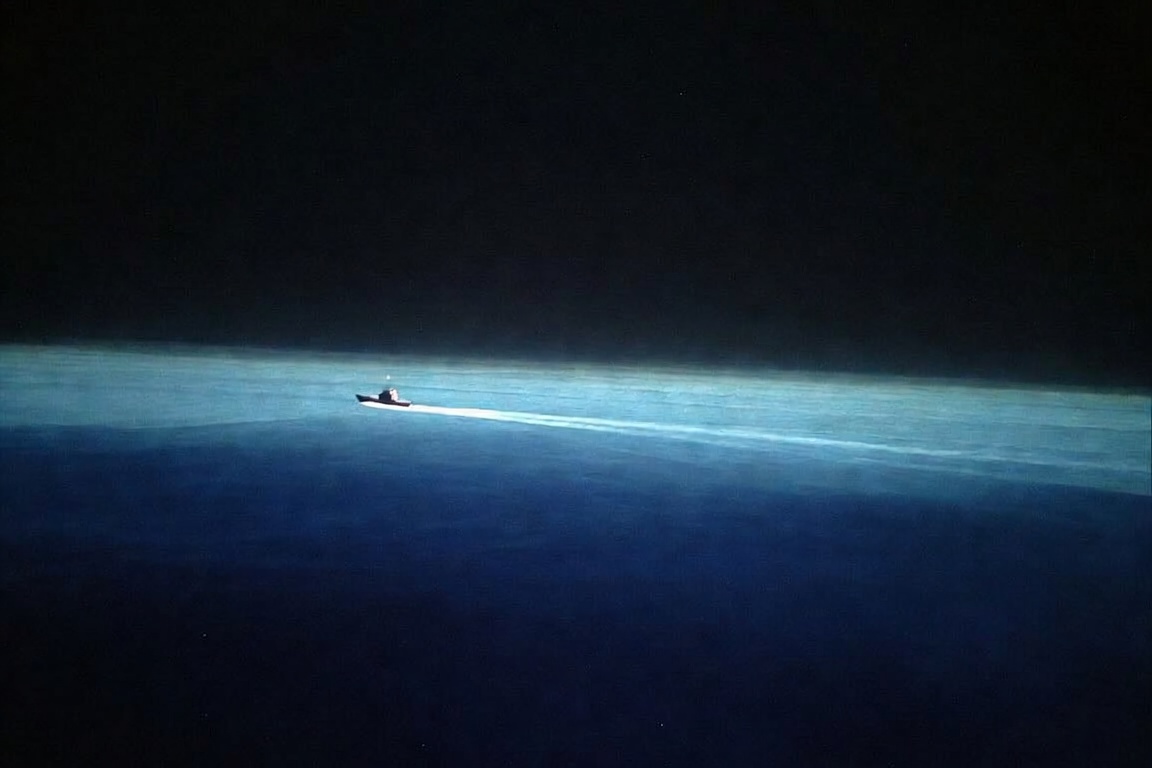
For centuries, sailors described rare nights when vast areas of ocean glowed with a steady white light.
The core of the story is not invented. It is a real subject supported by evidence. NASA Earth Observatory explains that milky seas are a rare form of bioluminescence and can stretch across enormous distances.
That distinction matters. EdgeCase works best when the confirmed version already feels cinematic enough to carry the story.
Satellite observations have helped scientists search for these events from space. The glow differs from the flashing blue sparkle many people associate with ordinary coastal bioluminescence.
The evidence is incomplete, but it is not vague. Researchers can measure, compare, observe, scan, sample, date, or document specific details. The strongest version of the article begins with those details rather than the loudest internet interpretation.
This matters because strange subjects attract exaggeration quickly. A fossil becomes a monster. A deep-sea animal becomes an attack story. An endangered species becomes a hidden-survivor myth. An ancient object becomes impossible technology. A natural event becomes a conspiracy. A cosmic anomaly becomes proof of aliens.
The evidence deserves a cleaner frame.
The water looks like snow, fog, or a luminous field. A ship can move through the glow without breaking the overall brightness.
The visual hook is immediate, but it is not the entire story. Anatomy, environment, history, and scientific context explain why the feature exists and why researchers still care.
A credible reconstruction should make the viewer curious before making any claim.
Researchers link milky seas with luminous bacteria and unusual ocean conditions, although direct sampling remains rare.
Without context, the subject becomes a random oddity. With context, it becomes a window into a larger system: evolution, extinction, deep-ocean adaptation, archaeology, geology, conservation, or cosmic structure.
That wider frame is what gives the topic weight.
The effect can sound supernatural because the surface glows steadily for long distances. The evidence supports a biological phenomenon, not a ghostly ocean.
The mistake is understandable. Humans interpret unfamiliar evidence using familiar categories. A strange silhouette becomes a monster. A geometric surface becomes a machine. A rare sighting becomes proof of survival. A data anomaly becomes proof of intelligence.
Good science storytelling does not mock that reaction. It corrects it.
These points create the stable foundation. They are the facts strong enough to anchor the headline, thumbnail, Reel, and caption without inflation. The article becomes more compelling when uncertainty is placed around the facts rather than mixed into them.
These questions remain open because the evidence has limits. Fossils preserve fragments. Deep water hides behavior. Rare animals are difficult to count. Ancient records disappear. Natural systems leave incomplete traces. Distant objects cannot be inspected directly.
An unresolved detail is not a failure. It is the edge of the current evidence.
Satellite data reveal scale while direct sampling remains difficult.
This is where the story stays alive. A complete answer would close the file. A specific unanswered question invites better surveys, deeper dives, improved scans, genetic work, field research, or more careful analysis.
The mystery remains credible because it is defined.
The Reel should move from ship-level wonder to satellite-level scale. The size creates the payoff.
The thumbnail should create one clear question. The Reel should reveal the evidence step by step. The article should reward the click with a factual explanation that remains cinematic. That sequence works because the real subject is already strong enough.
The glowing sea is real and biological, even when it looks impossible.
This line should remain visible throughout the article. Speculation can be discussed. It cannot be disguised as proof.
Milky seas prove that the ocean can create a spectacle large enough to appear from space while remaining difficult to study directly.
The final image is simple. A ship sails through white glowing water as the horizon disappears into the same light.
The subject remains memorable because the real explanation does not shrink the mystery. It turns the mystery into evidence.
The subject also reveals how easily important details can hide in plain sight. A fossil can remain misread for decades. A species can survive beyond scientific attention. A strange object can preserve its shape while losing its meaning. A signal or landscape can look simple until the right tool reveals the deeper pattern.
Better evidence does not remove wonder. It sharpens it.
The restrained conclusion is enough: Milky seas are rare bioluminescent events, while their full ecological triggers remain under study.
References: