11
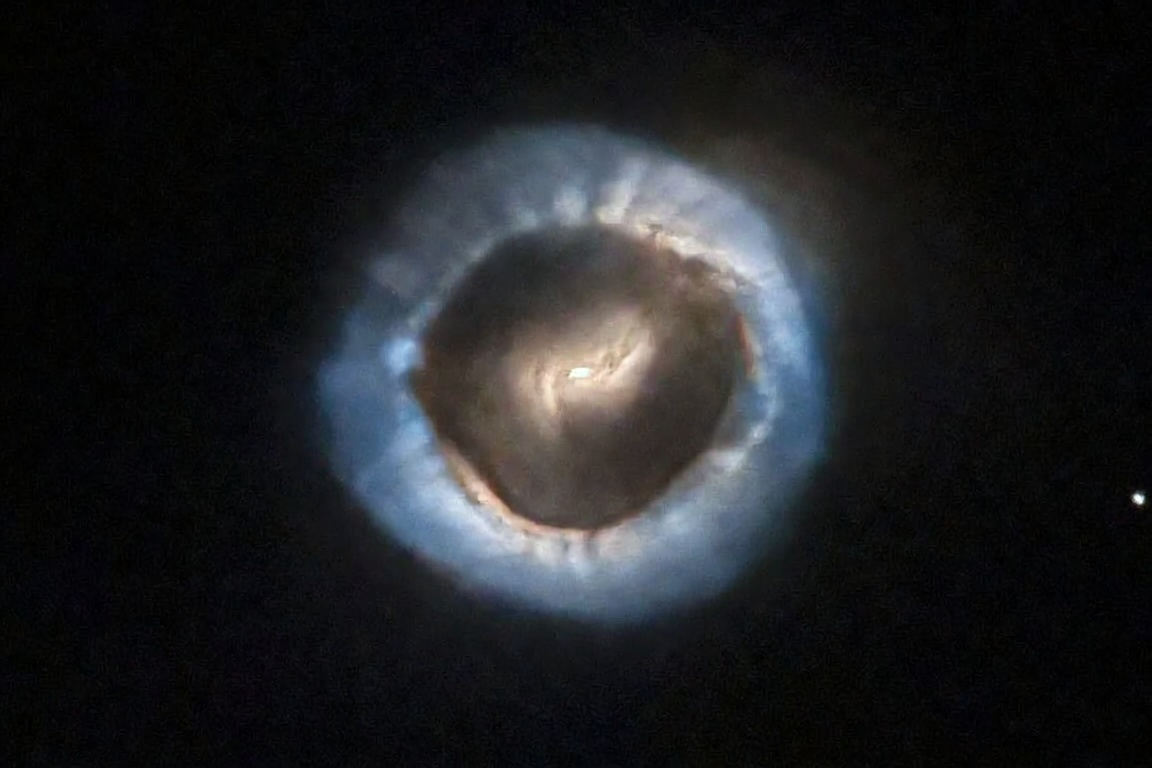
11In 2023, scientists exploring deep waters off Alaska found something bizarre: a smooth golden orb stuck to a rock about two miles below the surface.
It looked soft, it looked strange, and at first, nobody knew exactly what it was. Deep-sea researchers considered several possibilities:
That uncertainty made the object go viral. It had the perfect mystery shape—simple, golden, organic—sitting in a place humans barely understand. Now, researchers believe they have an answer.
The golden orb appears to be a biological remnant connected to Relicanthus daphneae, a mysterious deep-sea anemone-like animal.
More specifically, scientists identified it as a kind of cuticle or secreted structure used by the animal to attach itself to rock. In plain English:
That answer may sound less dramatic than “unknown sea monster egg,” but honestly, it is more interesting. It shows how little we still know about ordinary-looking life in the deep ocean.
The deep sea is incredibly difficult to study. At depths of more than 3,000 meters, there is no sunlight, the pressure is extreme, temperatures are cold, and direct human observation is limited. Because of this, scientists often rely on remotely operated vehicles (ROVs), short expedition windows, and rare physical samples.
A strange object on the seafloor can be difficult to identify from video alone. The orb did not show obvious animal features like a mouth, muscles, limbs, or a recognizable body shape. That is why researchers needed microscopy and genetic analysis.
Under the microscope, they found cells linked to cnidarians—the animal group that includes jellyfish, corals, and sea anemones. DNA evidence then connected the object directly to Relicanthus daphneae.
Relicanthus daphneae is not a typical animal people recognize. It looks anemone-like, with long tentacles, but its exact classification remains debated. Some scientists describe it as an anemone-like organism rather than simply calling it a true sea anemone.
That matters because classification is not just about naming; it tells scientists where the creature fits in the tree of life. In this case, Relicanthus seems unusual enough that researchers are still discussing its exact place.
The golden orb may help track where this animal lives. If these creatures leave behind similar golden cuticles, scientists may be able to recognize evidence of them even when the animal itself is gone.
That does not make the discovery weak; it just means the story is still developing.
The deep sea is not empty—it is just under-observed. Objects like the golden orb remind us that the ocean floor can still surprise trained experts.
The truth is not always a “monster” or an “alien.” Sometimes the truth is a strange biological structure from an animal most people have never heard of. And that is still extremely weird.