11
11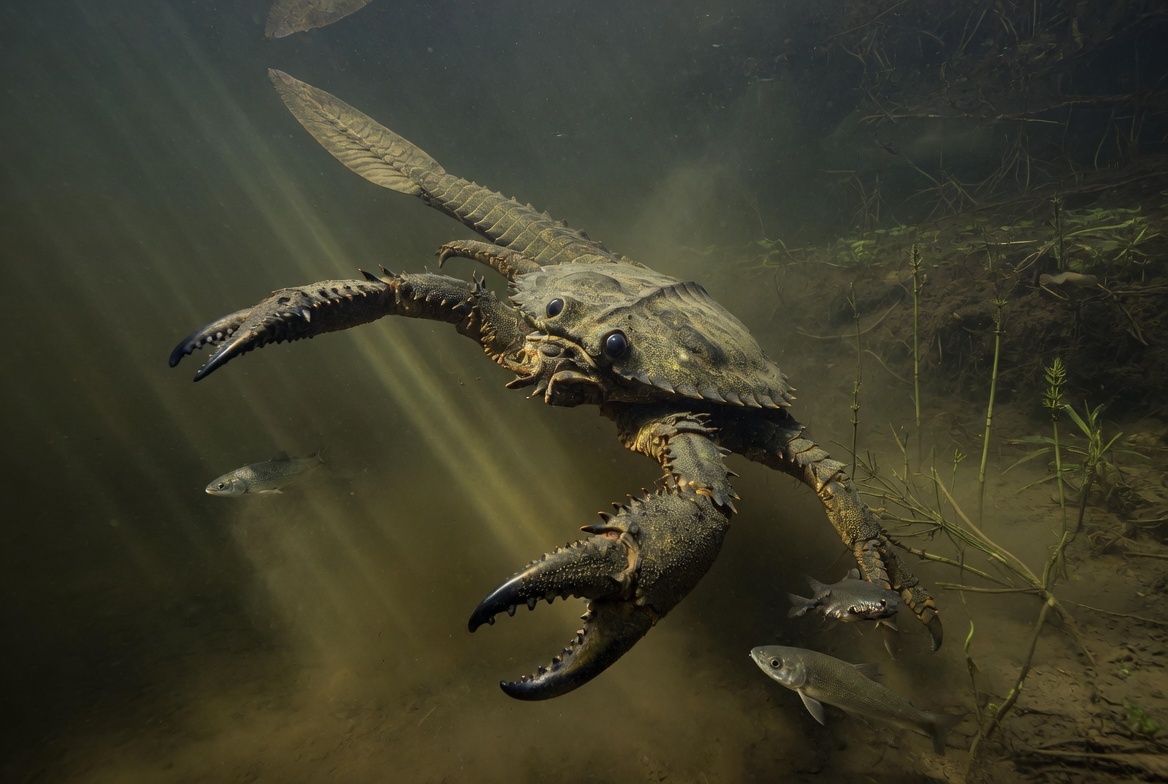
A scorpion-like creature longer than a person sounds like something invented for a creature feature. But Jaekelopterus was real.
It was a giant eurypterid, an extinct group often called sea scorpions, and it lived around 390 million years ago. Despite the nickname, these animals were not true scorpions, and some evidence suggests Jaekelopterus lived in freshwater or brackish environments rather than the open sea.
That detail may make it even more unsettling. This was not a deep-ocean mystery hiding far away. This was a giant arthropod prowling ancient waterways.
The most famous reason Jaekelopterus became such a headline creature is a huge fossil claw, or chelicera, discovered in Germany.
The claw measured about 46 centimeters long. Based on that fossil, researchers estimated the full animal could have been around 2.5 meters in length. That is bigger than many humans.
For an arthropod, that is absurdly large. Modern people are used to insects, spiders, crabs, and scorpions being small enough to step over, avoid, or observe from a safe distance. Jaekelopterus breaks that comfort completely.
It takes the arthropod body plan and scales it up into something that feels wrong.
Jaekelopterus belongs to a broader prehistoric pattern where some arthropods reached extreme sizes. Scientists have discussed several possible factors contributing to this gigantism:
The full story is complicated and varies across different groups and time periods. The safest version is this: ancient ecosystems sometimes allowed arthropods to become much larger than their modern relatives.
Jaekelopterus is one of the strongest examples. It shows that before vertebrates fully dominated many predator roles, giant arthropods could occupy spaces that feel almost impossible today.
The fossil evidence strongly suggests Jaekelopterus was a formidable predator. Its claws were large and armed with spines or tooth-like structures that could help grab prey. Its eyes and body design indicate it was likely an active hunter in its environment.
Possible prey may have included:
But again, careful wording matters. We can infer predatory behavior from anatomy and ecosystem context, but we do not have footage of it hunting. The exact details of how it caught prey remain reconstructed from fossils.
Still, the broad picture is clear enough for a powerful story. This was a large aquatic arthropod with grasping claws, living in waterways filled with early vertebrates and other animals. That is terrifying enough.
Jaekelopterus is effective because people already understand the fear language of scorpions and pincers. Even small scorpions can make people uncomfortable.
Now stretch that fear into an animal longer than a human, place it underwater, and make it part of Earth’s real fossil record. That is why the topic hits hard.
Jaekelopterus was a real giant eurypterid from the Devonian Period, estimated from fossil evidence to reach around 2.5 meters long. It was not a true scorpion, but its clawed arthropod body makes it one of the most unsettling aquatic predators in the fossil record.
The exact details of its lifestyle are reconstructed from fossils, but its size and anatomy make one thing obvious: ancient waterways were not safe places.