11
11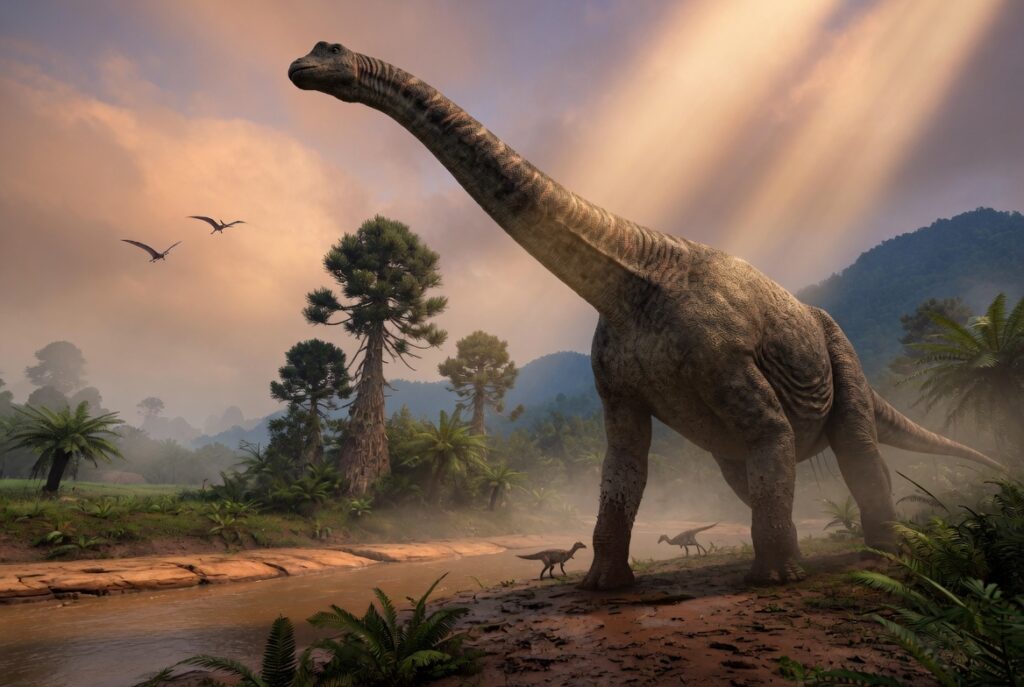
A new dinosaur discovery from Thailand is giving Southeast Asia a much bigger place in the prehistoric story.
Researchers have identified Nagatitan chaiyaphumensis, a massive long-necked dinosaur from Chaiyaphum province. It was not just another fossil name added to a list. Based on current reports, it may be the largest dinosaur ever discovered in Southeast Asia. That alone makes it an EdgeCase story.
This was a creature from a world before humans, before grasslands as we know them, and before modern continents looked the way they do today. More than 100 million years ago, this giant walked across what is now Thailand.
And its name fits the mystery:
Together, Nagatitan sounds almost mythical, but the evidence is fossil-based.
The discovery comes from fossil material including parts of the spine, ribs, pelvis, and limb bones. The animal is estimated to have reached around 27 meters in length and weighed roughly 26–27 tonnes. That is not movie-monster exaggeration—that is a real scientific estimate based on fossil anatomy.
Nagatitan was a sauropod, the same broad dinosaur group that includes some of the largest land animals ever known. These dinosaurs are famous for their long necks, small heads, massive bodies, and plant-eating lifestyle.
The most interesting part is not just its size. Scientists believe Nagatitan may have been one of the last giant sauropods in the region before changing environments reshaped Southeast Asia.
During the Early Cretaceous, the world was warmer. Sea levels were rising in many areas. Landscapes that once supported huge land animals may have been transformed over time by water, climate shifts, and habitat changes. This does not mean Nagatitan vanished overnight.
The safe interpretation is this: the discovery gives scientists a rare look at a late-surviving giant sauropod from Southeast Asia, at a time when the region’s ancient ecosystems were changing.
That distinction matters. The real story is already fascinating without pretending myth and fossil are the same thing.
Nagatitan feels like a reminder that the prehistoric world was not only centered in the places we usually hear about.
And some of those animals may still be waiting in stone, hidden under landscapes people walk across today. This is the kind of discovery that quietly changes the map. Not because it proves a monster legend, but because it shows the real ancient world was already massive enough.