11
11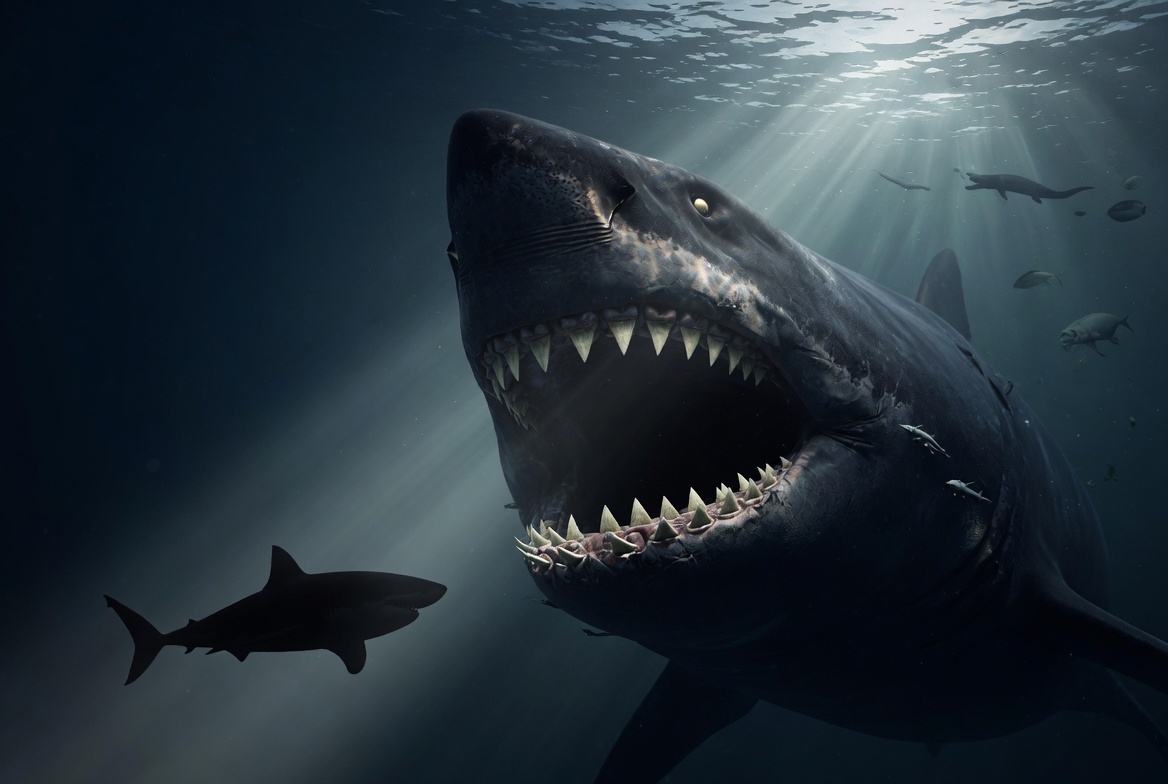
Long before humans existed, the oceans were ruled by a predator so large that even today it sounds exaggerated. Megalodon was not a sea monster from myth. It was a real shark, known mostly from fossil teeth and vertebrae.
But because shark skeletons are made mostly of cartilage, they do not fossilize as completely as bones. That means scientists are still piecing together its true size, body shape, hunting style, and extinction story from limited evidence.
That is what makes megalodon so fascinating. It is confirmed science, but still wrapped in mystery.
Most of what we know about megalodon comes from its teeth. These teeth are huge, triangular, serrated, and built for slicing through large prey. Some are bigger than a human hand. From these fossils, researchers estimate that large megalodons may have reached around 60 feet long, though exact size estimates vary depending on the method used. That alone makes it one of the most terrifying marine predators ever known.
But here is the strange part: we still do not have a complete megalodon skeleton. So the familiar image of megalodon as a giant great white shark may be partly outdated.
Some newer interpretations suggest it may have had a longer, more slender body than the oversized great white image many people imagine. This is still debated, but it shows how much mystery remains around an animal everyone thinks they already know.
Megalodon lived in oceans filled with large marine mammals, including ancient whales. This was not a small fish hunter. It was an apex predator built for the ancient open ocean.
Its teeth and bite mechanics suggest it could attack big prey with devastating force. It likely targeted:
Some interpretations suggest megalodon may have attacked vulnerable parts of large prey, using its jaws and teeth to disable animals quickly. That idea is based on fossil evidence and comparisons with modern shark behavior, but the exact hunting method cannot be directly observed.
So we know it was dangerous. We do not know every detail of how it killed. That uncertainty makes the animal even more cinematic.
Megalodon went extinct millions of years ago. There is no confirmed evidence that it survives today. Claims that it still lives in deep oceans are not supported by science. The real extinction story is more interesting anyway.
Scientists believe a combination of factors contributed to its disappearance:
For a giant animal with massive energy demands, even a small disruption could become deadly over time. Megalodon was powerful, but not invincible.
The mystery is not whether megalodon is still alive. It is not. The real mystery is how extreme this shark truly was.
Megalodon remains so popular because it sits between fact and imagination. The teeth are real. The size was real. The terror was real. But the full animal is still incomplete, reconstructed from fragments left behind by an ocean world that vanished millions of years before us.
Megalodon was not a fantasy monster. It was a real prehistoric shark, probably reaching enormous size and hunting large marine prey.
But because the fossil record is incomplete, scientists are still debating important details about its exact body shape, maximum size, and extinction.
That is why megalodon remains one of the most powerful sci-mystery stories on Earth: a confirmed predator that still feels almost impossible.