11
11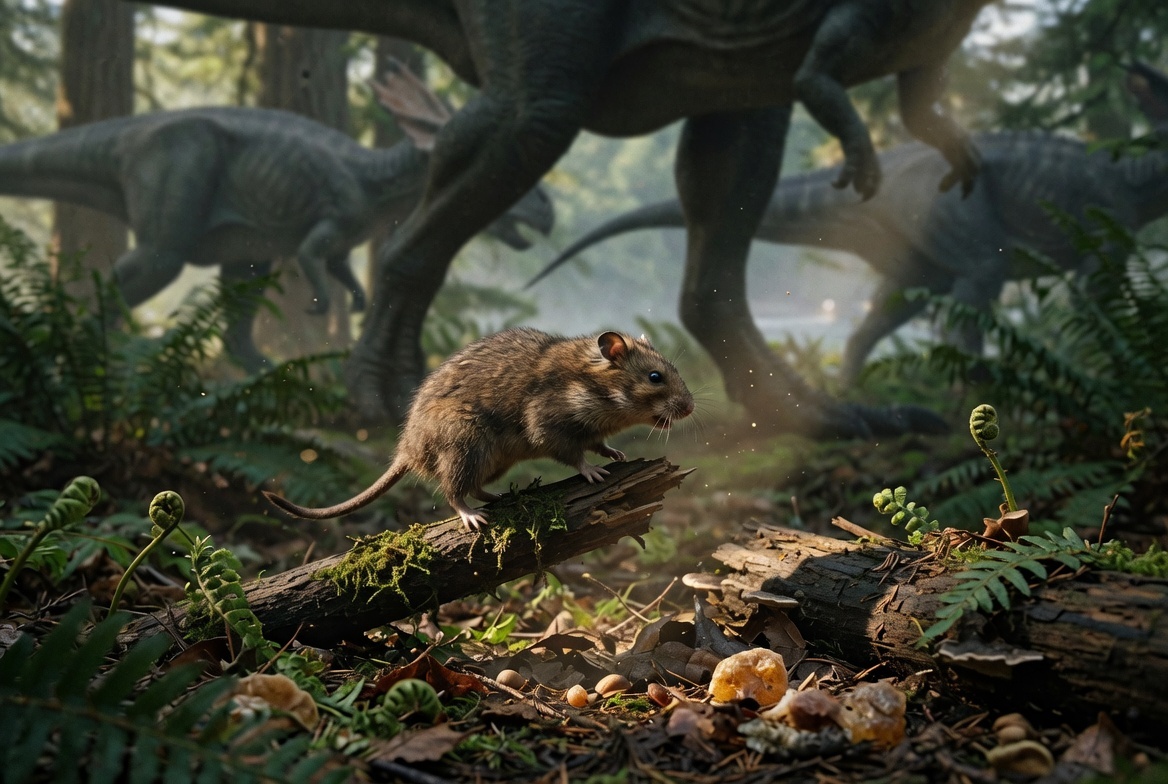
When people imagine the end of the dinosaurs, they picture giants falling. But the future belonged to something much smaller.
Researchers have identified a new prehistoric mammal species called Cimolodon desosai. It lived around 75 million years ago, before the asteroid impact that wiped out non-avian dinosaurs.
The animal was roughly the size of a golden hamster. Tiny. Easy to overlook. But it may help explain one of the biggest survival stories in Earth history.
Cimolodon desosai lived in what is now Baja California, Mexico.
It belonged to a group called multituberculates, an extinct branch of mammals that lived alongside dinosaurs and survived the mass extinction event at the end of the Cretaceous.
That survival matters. Many animals died out after the asteroid impact around 66 million years ago. Ecosystems collapsed. Food chains broke. Fire, darkness, cooling, and environmental chaos reshaped the planet.
Yet some small mammals made it through. Cimolodon desosai was not itself the exact animal that survived the extinction, but researchers say it was closely connected to lineages that did.
Small size can be a superpower during disaster.
A tiny animal needs less food. It can hide more easily. It can use burrows, trees, logs, and small spaces. If it eats a varied diet, it has more options when ecosystems collapse.
Researchers suggest Cimolodon desosai may have eaten fruits and insects and may have moved both on the ground and in trees. That kind of flexibility matters.
Specialists often suffer when the environment changes suddenly. Generalists can improvise. Cimolodon may represent that survival strategy in fossil form.
The survival angle is interpretation, but a strong one.
Scientists are not saying this individual animal watched the asteroid fall and survived it. The fossil is older than the extinction event.
The point is that its lineage had traits that may have helped related mammals survive later. That is a cleaner and more accurate story.
It was not “the one mammal that beat the asteroid.” It was a clue to the kind of mammal that could.
This is the opposite of the usual prehistoric giant story.
No huge teeth. No giant claws. No monster size.
Just a small mammal living under dinosaur shadows, carrying traits that may have helped life continue after disaster. That is cinematic in a different way.
The asteroid did not reward strength. It rewarded adaptability.
Cimolodon desosai reminds us that survival does not always look powerful. Sometimes the future belongs to the small, flexible, and overlooked.
The dinosaurs dominated the world. But after the disaster, mammals had the opening. And tiny creatures like this help explain why.